The Pinal County Justice Court serves as the local court for resolving everyday legal matters within the county. It operates under Arizona law as a limited jurisdiction court with authority over specific case types. These cases often involve issues that directly affect residents, drivers, renters, and small businesses. The court structure allows matters to be handled close to where people live. This local setup supports timely hearings and practical resolutions.
The justice court that Pinal County residents depend on, commonly referred to as the Pinal County Court, provides a formal setting for fair case review at the precinct level. It oversees traffic citations, misdemeanor criminal cases, and small claims within set dollar limits. The Pinal County Court also hears eviction filings and landlord-tenant disputes. Protective orders and civil traffic matters fall under its role as well. Through this focused scope, the court manages routine legal issues without involving higher courts.
What Is the Pinal County Justice Court?
The Pinal County Justice Court is a county-level court that handles specific civil and criminal matters under Arizona law. It operates as a limited jurisdiction court, which means its authority applies only to certain case types and dollar limits. The court plays a direct role within the Arizona judicial branch by resolving everyday legal disputes at the local level. It focuses on speed, clarity, and community-based justice rather than complex trials.
Role Within Arizona’s Court System
The Pinal County Justice Court functions as an entry-level court within the county-level court structure. Each courtroom is led by a justice of the peace, an elected judicial officer who applies Arizona statutes and court rules. These judges hear cases that affect residents, drivers, renters, and small businesses across the county.
Typical responsibilities include:
- Misdemeanor criminal offenses
- Traffic and civil traffic violations
- Civil cases with lower dollar limits
- Eviction and small claims cases
- Protective order requests
This structure supports efficiency. Cases move faster than in those in higher courts, and hearings are less formal. For many residents, this court represents their initial encounter with the legal system.
Justice Court vs. Superior Court
The Justice Court and the Superior Court serve different purposes within Arizona. The Superior Court handles felony cases, family law matters, probate issues, and large civil lawsuits. It carries broad authority and conducts jury trials for serious disputes. By comparison, the justice court in Pinal County handles narrower matters. Case limits define its scope, and penalties stay within statutory caps. This separation allows each court to focus on its assigned workload, keeping the system balanced and responsive.
Search, Case Lookup, and Court Records in Pinal County Justice Court
Users can search Pinal County Justice Court cases by using official court websites or by visiting the clerk’s office. A correct search method helps locate accurate case status, hearing dates, and public records without confusion.
How to Search Court Records Correctly
A proper case lookup begins with the right information and the right search tool.
Steps to follow:
- Collect case details such as the case number, defendant name, or plaintiff name.
- Use the official court search website listed below.
- Enter names exactly as shown on the summons or complaint.
- Review the docket search results for filings, hearing dates, and disposition.
- Check the court calendar to follow upcoming hearings and trials.
This method helps users avoid incomplete or outdated results.
Official Website to Search Pinal County Justice Court Cases
These are the primary and trusted sources for searching public court records:
Arizona Judicial Branch – Public Access Case Lookup
Case Number Search
- Open: https://apps.azcourts.gov/publicaccess/caselookup.aspx
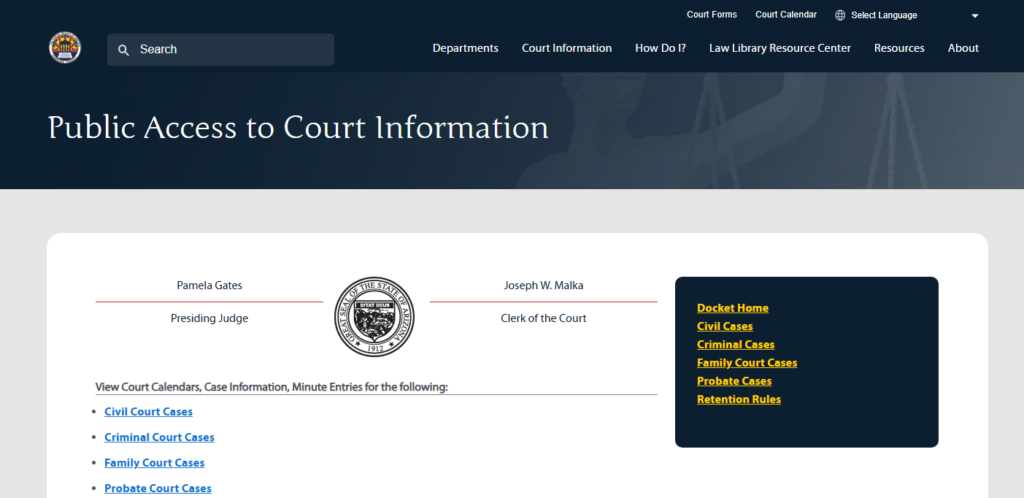
- Enter the case number
- Select court (optional)
- Click Search
Name Search
- Open the same page
- Enter last name (first name optional)
- Choose court or keep All Courts
- Click Search
Types of Cases Handled by Pinal County Justice Courts
Pinal County Justice Courts handle a wide variety of legal matters that affect residents and businesses, including lower-level criminal cases, civil disputes within set monetary limits, traffic matters, evictions, and protective orders. These courts provide a faster and more accessible forum than higher courts, helping resolve common legal issues efficiently while maintaining fairness and clarity.
Criminal Cases
Pinal County Justice Courts hear misdemeanor cases, which are minor criminal offenses that carry lighter penalties than felonies but can still result in fines, probation, or up to six months in jail, depending on the classification. Common misdemeanor offenses include disorderly conduct, shoplifting under felony thresholds, simple assault without serious injury, criminal trespass, and DUI offenses charged as misdemeanors. The legal process typically begins with a citation or arrest, followed by an arraignment where the defendant enters a plea, and may include pretrial hearings, plea negotiations, or trials, with the judge issuing a sentence that could involve fines, probation, mandatory programs, or short-term incarceration.
Civil Cases and Lawsuits
Civil cases in Pinal County Justice Courts involve monetary disputes up to $10,000, where one party, the plaintiff, seeks compensation or resolution against a defendant without any criminal charges involved. Common disputes include breach of contract, unpaid debts, property damage claims, and certain landlord-tenant conflicts outside formal eviction proceedings. The process begins with filing a complaint and serving it to the defendant, who responds within a set period, and the court often encourages settlements or mediation, with judges reviewing evidence and testimony to issue binding decisions that resolve the dispute efficiently and fairly.
Small Claims Cases
Small claims cases provide a simplified way to resolve minor disputes quickly and with minimal cost, typically involving amounts lower than standard civil cases. These proceedings are informal, allowing parties to represent themselves and focus on key facts rather than legal procedures, and common issues include unpaid services, minor property damage, and small contractual disagreements. Filing a claim involves completing a simple form, paying a modest fee, and notifying the other party, with hearings usually scheduled within weeks, after which the judge delivers a decision promptly, making small claims court an accessible option for resolving everyday disputes efficiently.
Traffic Violations and Citations
Traffic violations, including speeding, failure to obey signals, seat belt infractions, or other driving-related offenses, are handled by Pinal County Justice Courts, with some violations requiring a court appearance while others can be resolved through payment of fines online or by mail. More serious traffic offenses, such as reckless driving, may carry misdemeanor charges. The court reviews citations, hears testimony if needed, and issues rulings that can affect fines, driving records, or license status, ensuring that drivers comply with traffic laws while promoting road safety in the community.
Evictions and Protective Orders
Justice Courts address eviction cases where landlords seek possession of property due to unpaid rent or lease violations, and tenants are given notice and the opportunity to present their case in court. Protective orders aim to prevent harassment, domestic violence, or threats, with judges issuing temporary or permanent orders based on sworn statements and evidence. By handling these cases promptly, Justice Courts protect personal safety, maintain housing stability, and balance the rights of landlords, tenants, and individuals in potentially high-stakes situations.
Jurisdiction and Authority of Justice Courts in Pinal County
Justice courts in Pinal County hold limited authority over certain civil and criminal cases within defined boundaries. These courts operate at the precinct level and focus on lower-level disputes and offenses allowed under Arizona law.
Limited Jurisdiction of Pinal County Justice Courts
Justice courts in Pinal County function as limited jurisdiction courts, which set clear boundaries on the cases they may hear. This structure exists to keep minor legal matters local and efficient. As a result, cases move faster and remain closer to the community involved.
Under Arizona judicial branch rules, a justice court in Pinal County may hear civil disputes only up to a set dollar amount. The current civil monetary limits allow these courts to decide cases involving claims of $10,000 or less, excluding interest and court fees. Claims that exceed this threshold move to the Superior Court.
Common civil case types include:
- Small claims and debt disputes
- Landlord–tenant disagreements
- Contract and property damage cases
- Civil traffic violations
This division of authority helps match each case with the right court level.
Criminal Authority: Misdemeanors Only
Pinal County justice courts hold authority over criminal misdemeanors, not felony offenses. This narrow scope keeps the focus on lower-level charges that carry lighter penalties.
Justice courts may hear cases such as:
- Class 1, 2, and 3 misdemeanors
- DUI and DUI-related charges
- Shoplifting and disorderly conduct
- Criminal traffic offenses
Felony cases, including serious assaults or major theft crimes, fall outside the justice court’s power and move to the county’s Superior Court. This separation protects due process and keeps serious matters in higher courts.
Geographic Jurisdiction by Precinct
Each justice court in Pinal County serves a specific geographic precinct. A justice of the peace presides only over cases tied to that precinct. Location plays a direct role in court authority.
A case typically belongs in a justice court precinct when:
- The incident took place within that precinct
- The defendant lives in that precinct
- The cited offense occurred on local roads or property
This structure helps residents file cases closer to home and reduces confusion over court placement.
Why Jurisdiction Limits Matter
Justice courts exist to handle targeted case types, which shape how residents interact with the legal system. Limited authority means faster hearings, simpler procedures, and lower costs for eligible cases. At the same time, higher courts retain control over serious civil and criminal matters.
Judges and Court Administration
Pinal County Justice Courts rely on justices of the peace and trained court staff to manage daily court operations. Together, they handle case decisions, records, scheduling, and public service in a fair and orderly way.
Role of Judges
Each Pinal County Justice Court is led by a justice of the peace, an elected judicial officer. This judge presides over cases within the court’s legal authority and applies Arizona law in a neutral manner. The role focuses on fairness, consistency, and clear decision-making for all parties.
A justice of the peace typically handles:
- Misdemeanor criminal cases, such as traffic-related offenses
- Civil disputes involving limited dollar amounts
- Evictions and landlord-tenant matters
- Protective orders and related hearings
Judges review evidence, listen to testimony, and issue rulings during hearings or trials. They explain court decisions in plain language so parties know what to expect next. At the same time, judges follow court rules and ethical standards set by the Arizona judiciary.
Responsibilities of Court Clerks
Behind the courtroom, the court clerk plays a key role in court administration. Clerks manage case files and support both the judge and the public throughout each case stage. Their work keeps the court running smoothly every day.
Court clerks commonly handle:
- Case filings and record maintenance
- Court calendars and hearing schedules
- Fine and fee processing
- Public inquiries at the clerk’s counter
Clerks share procedural information, such as filing steps or payment options. They do not give legal advice. Through accurate records and steady communication, clerks support transparency and efficient court service.
Filing a Case in Pinal County Justice Court
Filing a case in Pinal County Justice Court begins by submitting the necessary documents to the Clerk of the Court and paying the required court fees. Once filed, the Clerk of the Court ensures that the court issues a summons and complaint to the other party, officially starting the legal process. Filing a case in Pinal County Justice Court involves a clear, step-by-step process that helps ensure the matter is officially recorded and scheduled for review. The first step is completing the summons and complaint, which outlines the nature of the case and the parties involved. These forms are available at the courthouse or on the official Pinal County Justice Court website, and the Clerk of the Court can provide guidance on completing them correctly.
Key Documents and Requirements
- Summons and Complaint: This document explains the claim and notifies the other party that a case has been filed.
- Filing Forms: Depending on the case type, additional forms such as civil or small claims documents may be required.
- Court Fees: Fees vary based on the type of case. The clerk can provide a current fee schedule.
After submitting the documents and fees, the court assigns a case number and schedules initial proceedings. The filing process officially informs the other party through the court-issued summons, which outlines their obligations and the timeline for responding.
Case Lookup, Records, and Court Calendars
Pinal County Justice Court allows the public to search for case information and review court schedules online. Court records, hearing dates, and upcoming calendar events are available to provide transparency and support planning.
For users seeking case lookup, the court offers online tools where cases can be searched by name, case number, or citation. This service helps individuals, attorneys, and researchers quickly find relevant information. Publicly available court records typically include case summaries, filing dates, parties involved, charges or claims, and court rulings. While some sensitive details may be restricted, most civil and criminal case information is open for review.
Searching for Cases
People usually search using specific identifiers such as:
- Case Number: Unique number assigned to each case
- Party Name: Names of plaintiffs, defendants, or petitioners
- Citation or Ticket Number: For traffic or minor criminal cases
The search results display a summary of the case, including hearing dates, case status, and recent updates. Users can track ongoing cases or verify completed proceedings efficiently.
Court Calendars and Hearing Dates
The court publishes a court calendar that lists scheduled hearings, trials, and other important events. This calendar is organized by:
- Date: Daily or weekly listings
- Case Type: Civil, criminal, traffic, or small claims
- Courtroom: Location of the hearing within the courthouse
Calendars help parties prepare for appearances and ensure timely participation. Many users check these calendars to confirm their hearing times or to plan around public sessions.
Pinal County Justice Court Locations and Precincts
Pinal County justice courts are spread across the county in several precinct courts so residents can reach their local court services easily. Each precinct has a dedicated court location with contact info for phone, email, and clerk support that can help with filings, hearings, and general questions.
The precinct-based structure of Pinal County justice courts makes it easier for people to interact with local judicial services without long drives. Every court handles cases like traffic tickets, minor criminal matters, small claims, and civil disputes, and each clerk’s office offers support for filings, paperwork, and scheduling. Accessibility matters: putting courts in multiple precincts ensures fair public service across the county.
How Precinct Courts Serve the Public
Each Pinal County justice court is tied to a geographic precinct. Residents within that area go to their assigned court for hearings and official matters. The precinct system helps minimize travel barriers and keeps the courts close to the community they serve. A precinct justice court typically offers:
- Clerk support for forms, payments, and scheduling
- Case processing for traffic, civil, and minor criminal cases
- Information services by phone or email for procedural help
Below are some of the key precinct courts with contact details. Exact physical addresses are less important than knowing how to get in touch or where to call for help.
Main Pinal County Justice Court Contacts
| Precinct Court | Phone | Email (if available) |
|---|---|---|
| Apache Junction Justice Court (Precinct 6) | (480) 982‑2921 | apachejunctionjc@courts.az.gov |
| Casa Grande Justice Court (Precinct 2) | (520) 866‑7475 | casagrandejusticecourt@courts.az.gov |
| Central Pinal Justice Court (Precinct 3) | (520) 866‑7900 | centralpinaljc@courts.az.gov |
| Copper Corridor Justice Court (Precinct 5) – Superior Office | (520) 866‑6950 | skip@courts.az.gov |
| Copper Corridor – Oracle Satellite | (520) 896‑9250 | J1105@courts.az.gov |
| San Tan Valley (Pioneer) Justice Court (Precinct 1) | (480) 380‑7312 | pioneerjc@courts.az.gov |
| Western Pinal Justice Court (Precinct 4) | (520) 866‑3999 | westernpinaljusticecourt@courts.az.gov |
(FAQ) About Justice Court
Pinal County Justice Court handles a variety of cases within its limited jurisdiction, focusing primarily on misdemeanors, traffic violations, and small civil disputes. It provides an accessible venue for residents to resolve legal matters efficiently and fairly.
What cases does the Pinal County Justice Court handle?
Pinal County Justice Court handles misdemeanor criminal cases, traffic violations, small claims, and civil disputes under $10,000. It also manages eviction proceedings and justice-related administrative matters. This court is designed to resolve less complex legal issues quickly, keeping cases local and accessible. Criminal cases may include DUI, petty theft, or disorderly conduct, while civil matters often involve landlord-tenant disputes or property damage claims.
Is Justice Court the same as Superior Court?
Justice Courts and Superior Courts differ mainly in jurisdiction and case types. Justice Courts handle limited jurisdiction cases like misdemeanors and small claims. In contrast, Superior Courts handle more serious criminal cases, large civil suits, family law matters, and appeals. Justice Courts are often faster and more informal, while Superior Courts follow a more detailed legal process with broader authority.
What is a limited jurisdiction court?
A limited jurisdiction court can hear only specific types of cases defined by law. Pinal County Justice Court is a limited jurisdiction court because it deals with small civil cases, misdemeanors, traffic violations, and some administrative matters, but cannot handle felony criminal cases or large civil disputes. This structure ensures faster case resolution and reduces backlog in higher courts.
Can I look up a case online?
Yes, residents can check certain case information online through the Pinal County Justice Court website or authorized public records portals. Online access typically includes case status, hearing dates, and basic court filings. Some sensitive details may remain confidential for privacy or security reasons. Using the online lookup saves time and helps parties stay informed without visiting the courthouse in person.
What is the difference between small claims and civil court?
Small claims court handles disputes involving $10,000 or less, emphasizing speed and simplicity. Civil court, by contrast, deals with larger monetary disputes and requires more formal procedures, including attorneys and complex filings. Small claims are often resolved by the judge with limited procedural requirements, making it easier for individuals to represent themselves.